Faculty
Field of Philosophy
Yoshitsugu Igawa(井川義次)
Modern Chinese Intellectual History; History of East–West Intellectual Exchange
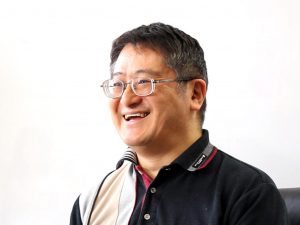
My primary research area is Chinese philosophy. In addition, I also study the realities of intellectual exchange between East and West from the 16th to the 19th centuries. Inspired by the movement of ideas across regions—naturalized citizens, the Silk Road, and many other forms of intellectual circulation across all directions—I became fascinated with Asian sources of knowledge such as the Shiji (Records of the Grand Historian), Water Margin, and Romance of the Three Kingdoms, as well as Confucianism, Daoism, and even Buddhism, alongside the sharp logic of the Western world. My research began from a desire to understand whether and how these traditions actually intersected in historical fact.
Books & Articles
Monograph
The Westward Transmission of Song Learning: The Road to Modern Enlightenment(Jimbun Shoin, 2009)[in Japanese]
Co-authored / Edited
History of World Philosophy, Supplementary Volume(Chikuma Shobo, 2020)[in Japanese]Nobuo Horiike (General Editor), Fumiyasu Ishikawa & Yoshitsugu Igawa (Eds.), Eurasia of Knowledge series, Vol. 1(Meiji Shoin, 2013)[in Japanese]Yoshitsugu Igawa et al. (Eds.), Eurasia of Knowledge(Meiji Shoin, 2012)[in Japanese]
For research achievements and publications, please see the following:
▶ University of Tsukuba TRIOS
Yoshinori Tsuzaki(津崎良典)
Modern Western Philosophy (French Philosophy)

My specialization is modern Western philosophy, especially in the French-speaking world. In recent years, I have focused on the reception, modification, and use of ancient Stoicism in Montaigne and his contemporaries—namely, the formation and development of Neo-Stoicism.
Books & Articles
Monographs
Descartes: Training the Soul(Fusosha, 2020)[in Japanese]The Melancholy of Descartes(Fusosha, 2018)[in Japanese]Co-authored
How to Enjoy French Literature(Minerva Shobo, 2021)[in Japanese]History of World Philosophy, Supplementary Volume(Chikuma Shobo, 2020)[in Japanese]An Easy Guide to Philosophy and Thought(Minerva Shobo, 2019)[in Japanese]Curiosity and the Passions of Knowledge from Montaigne to Hobbes(Rome: Bardi Edizioni, 2018)
Normes et marginalités à l’épreuve(Strasbourg: Presses universitaires de Strasbourg, 2010)
Translations
Cambouchner, Descartes Didn’t Say That(Shobunsha, 2021)[in Japanese]Paganini, Skepticism and Faith: From Bodin to Hume(Chisen Shokan, 2020)[in Japanese]Negri, Descartes Politico(Seidosha, 2019)[in Japanese]Devillairs, Descartes(Hakusuisha, 2018)[in Japanese]Leibniz, Collected Works of Leibniz, Series II, Vol. 3(Kosakusha, 2018)[in Japanese]Leibniz, Collected Works of Leibniz, Series II, Vol. 2(Kosakusha, 2016)[in Japanese]Descartes, Complete Correspondence of Descartes, Vol. 4(Chisen Shokan, 2016)[in Japanese]Bloch, Materialism(Hakusuisha, 2015)[in Japanese]Derrida, The Right to Philosophy 2(Misuzu Shobo, 2015)[in Japanese]Philosophie japonaise : le néant, le monde et le corps(Paris: J. Vrin, 2015)
Yuta Nishimura(西村雄太)
Medieval Philosophy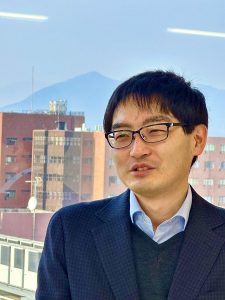
I study Western medieval thought, particularly the ontological and metaphysical debates developed within Scholasticism from the late 13th to the early 14th century. I believe that, in order to confront head-on the question “What is the human being?”—a question that is both the origin and the ultimate horizon of philosophical thinking—it is indispensable to investigate what the Scholastics called “being itself,” “God,” “truth,” and related notions: that which is the root of our very existence and of all our knowledge.
Books & Articles
“A Fly within God Is Nobler than the Highest Angel: On Being as That Which Creation Gives in Eckhart,” Studies in Medieval Thought, No. 64(2022)[in Japanese]“Dietrich of Freiberg, ‘On Being and Essence’ (Translation of the Original Text)”(2021–2023)[in Japanese]“Dietrich of Freiberg’s Theory of Deification: From the Perspective of Human Intellect as the ‘Image of God’,” in Theosis: Traditions of Deification in the Eastern and Western Churches(Kyoyusha, pp. 242–268, 2018)[in Japanese]
Koji Hashimoto(橋本康二)
Analytic Philosophy
I study the problem of what truth is, and how necessary truths are established.
Books & Articles
“Term Logic and Venn Diagrams: The Case of Euler,” Journal of Philosophy and Thought (University of Tsukuba), No. 46(2021)[in Japanese]“Truth and Falsity in Spatial Figures,” Journal of Philosophy and Thought (University of Tsukuba), No. 45(2020)[in Japanese]“Truth and Falsity in Mathematical Figures,” Journal of Philosophy and Thought (University of Tsukuba), No. 44(2019)[in Japanese]
Yoshishige Higaki(檜垣良成)
Modern Western Philosophy; German Philosophy

As research, I examine the history of Western philosophy up to the present, with Kant as a central focus. Philosophically, I devote myself to deepening understanding of—and actually practicing—dialogue as a “search for truth,” which has become extremely difficult in contemporary times. I consider the greatest problem of modern society to be the loss of a sense of reality with respect to “truth” in the Western sense.
Books & Articles
A Study on the Formation of Kant’s Theoretical Philosophy: Focusing on the Concept of “Reality”(Keisuisha, 2009)[in Japanese]Questions to Reason: Contemporary Kant Studies 10(Koyoshobo, 2007)[in Japanese]“Kant’s Ethics as a Theory of Motivation,” Annual Report of Ethics, Vol. 61(2012)[in Japanese]“Synthetic Judgments and Reality: Kant and the Establishment of the Analytic/Synthetic Distinction,” Shiso, No. 1135 [in Japanese]“Dialogue and Truth: For the Restoration of Education and Morality,” Journal of Philosophy and Thought (University of Tsukuba), No. 40(2015)[in Japanese]
Mikiko Yokoyama(横山幹子)
Analytic Philosophy
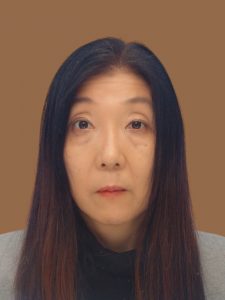
Drawing on philosophers such as H. Putnam, I have examined issues of realism and skepticism. In recent years, in connection with these topics, I have also worked on “the problem of perception.” In addition, I am interested in the relationship between philosophy and library and information science—another field that has taken “knowledge” as a central problem—particularly in relation to philosophical ontology and epistemology, and I pursue research in this direction as well.
Books & Articles
“Ontological Conflicts in Library and Information Science: A Comparison of Gnoli’s Ontological Pluralism and Hjørland’s Ontological Monism,” Library and Information Science(2020), pp. 1–21.
Yokoyama Mikiko, “Rational Acceptability of Truth,” Annals, vol. 29(2020), pp. 27–39. (Translation of the following paper originally written in Japanese: “Rational Acceptability and Truth,” Studies in the Foundations of Science, vol. 35, no. 1, 2007.)
“Putnam’s Generous Naturalism: Focusing on ‘Naturalism’,” Journal of Library, Archive and Information Studies, vol. 16, no. 2(2019)[in Japanese]“Putnam’s Critique of Disjunctivism and Liberal Naturalism,” Journal of Library, Archive and Information Studies, vol. 15, no. 2(2018)[in Japanese]“Genuine Perceptual Experience and Neural Activity,” Journal of Library, Archive and Information Studies, vol. 14, no. 2(2017)[in Japanese]“Where Is Knowledge Located?” in Yu Itsumura, Naoki Takubo & Takashi Harada (Eds.), For Those Learning Library and Information Science(Sekai Shisosha, 2017)[in Japanese]
Field of Ethics
Ken Chiba(千葉建)
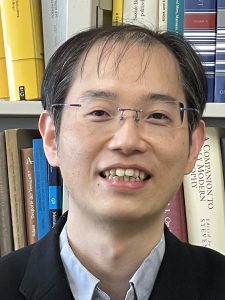
History of Modern and Contemporary Western Ethical Thought; German Enlightenment Studies
Books & Articles
“An Introduction to the Archaeology of Inner Obligation: Wolffian Duty Theory as a Source of Kant’s Deontology,” Ethics (University of Tsukuba), No. 36(2020)[in Japanese]“How Is Weakness of Will Possible in Kant’s Ethics?” Journal of Philosophy and Thought (University of Tsukuba), No. 36(2018)[in Japanese]“Kant’s Virtue Ethics and the Problem of Emotion,” Journal of Philosophy and Thought (University of Tsukuba), No. 33(2015)[in Japanese]
Xiaolin Chang(常瀟琳)
Modern Japanese Intellectual History

My specialty is Japanese intellectual history. I am interested in questions such as the relationship between tradition and the present, and the relationship between the particularity and universality of civilizations. In particular, I study the thought of people in the Edo and Meiji periods of the 19th century, when encounters with Western thought posed major challenges to established views of human nature, social order, and the world.
Books & Articles
“Reason” and “Custom”: Mito Learning and Civilization Discourse in the Nineteenth Century(Graduate Schools for Law and Politics, The University of Tokyo, 2022), 247 pp. (Recipient of the Special Outstanding Doctoral Dissertation Award, Graduate Schools for Law and Politics, The University of Tokyo) [in Japanese]“Between ‘Principle’ and ‘Custom’: The Development of Nakamura Masanao’s Thought in the Late Tokugawa Period,” Journal of Japanese Intellectual History Studies, No. 55, pp. 100–117(September 2023)[in Japanese]
Field of Religious Studies
Takeshi Kimura(木村武史)
Religious Studies
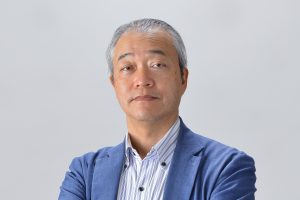
Religious Studies; Mythology; Indigenous Religions; American Religion; Sustainability, Technology, and Religion; Religion, Robots, and AI
Books & Articles
For research achievements and publications, please see the following:
▶ University of Tsukuba TRIOS
Taisei Shida(志田泰盛)Indian Philosophy; Classical Indology
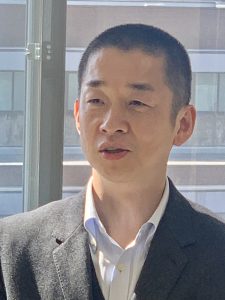
“Hypothesis-Generating Logic in Udayana’s Rational Theology,” Journal of Indian Philosophy 39, pp. 503–520(June 2011).
“Logic in India,” in History of World Philosophy, Supplementary Volume—Opening the Future(Chikuma Shobo, 2020)[in Japanese]“Udayana’s theory of extrinsic validity in his theistic monograph,” History of Indian Philosophy, pp. 214–222(Routledge, 2018).
Hiroto Doi(土井裕人)
Religious Studies; Digital Humanities
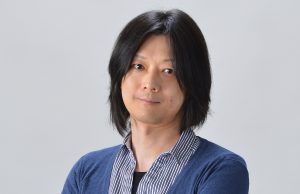
Building on research into religious thought in the ancient Western world, I work on digital humanities and on grounding diversity from the perspective of philosophy and intellectual history.
Books & Articles
“The Vehicle of the Soul as a ‘Mediating Entity’ in Proclus,” in Shinichi Tsumagari & Ayako Hosoda (Eds.), A Religious History of Mediating Objects, vol. 2(Litton, 2020)[in Japanese]“On the Earliest Phase of the Reception of Neoplatonism in Japan: Between Philosophy and Religion,” Journal of Philosophy and Thought (University of Tsukuba), No. 45(2020)[in Japanese]“Developing Teaching Materials for Religious Studies through Visualization and Tangibilization and toward Their Applications,” Proceedings of the Symposium on Computers and the Humanities(2017)[in Japanese]
Takahiro Hirano(平野貴大)
History of Islamic Thought; Shi‘a Thought
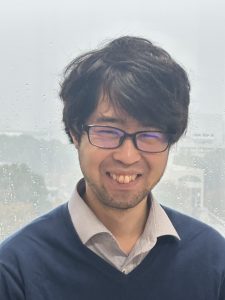
My specialization is the history of Islamic thought, especially Shi‘a thought. I have examined the formation of doctrines of Twelver Shi‘ism, the largest Shi‘a denomination, and the doctrinal boundaries between Twelvers and other Shi‘a groups of the same periods. In recent years, based on commentaries on scripture as well as theological and legal texts, I have been working to elucidate Twelver Shi‘ism’s self-understanding and understanding of others from its early period to the present.
Books & Articles
For research achievements and publications, please see the following:
▶ University of Tsukuba TRIOS
Takeshi Yokoyama(横山 剛)
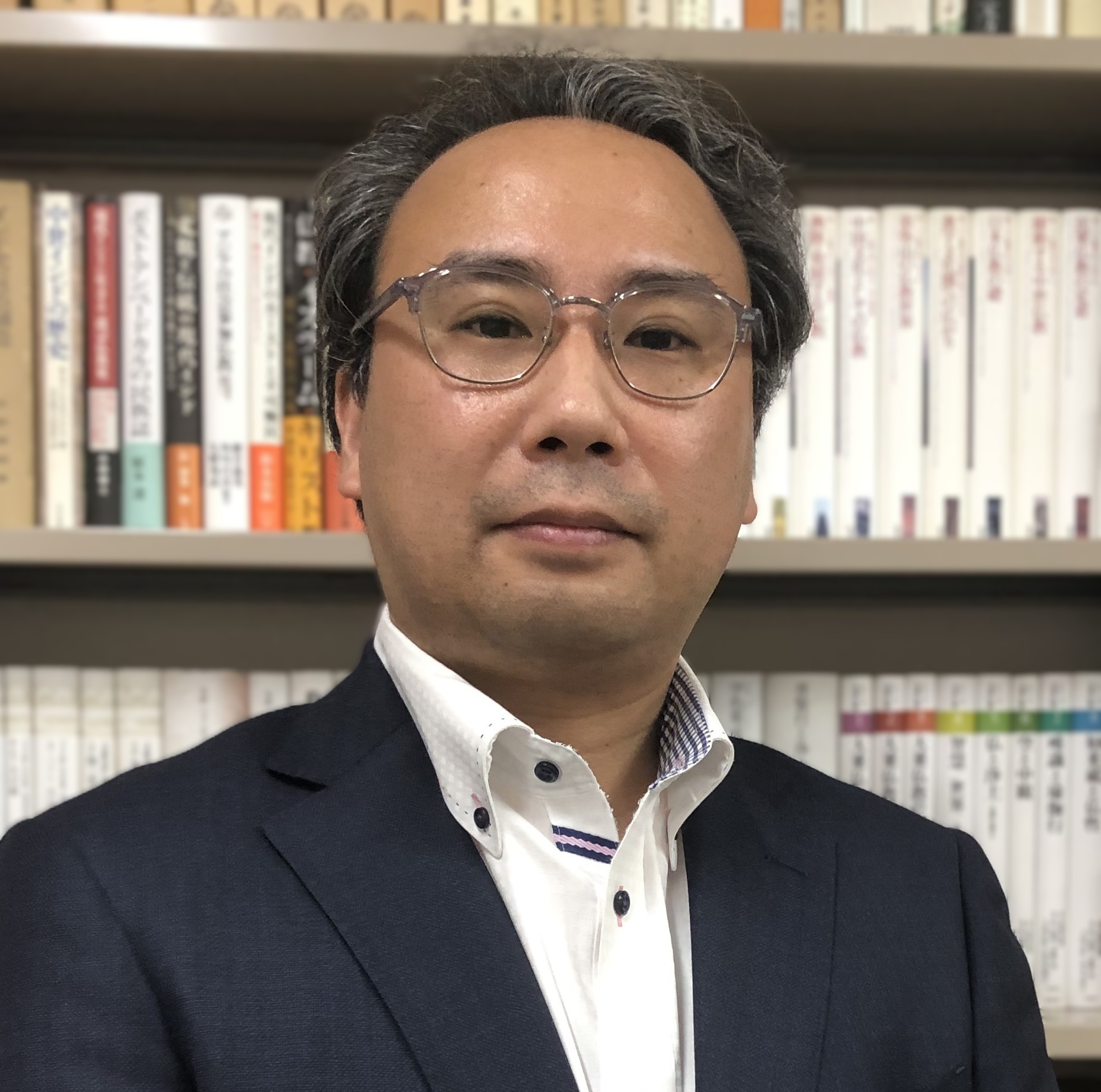
Buddhist Studies仏教学
I study Indian Buddhism. Focusing on the Sarvāstivāda school—one of the most influential among the various early Buddhist schools—I examine how its thought contributed to the construction of Buddhist doctrinal systems, how later Mahāyāna Buddhists understood Sarvāstivāda doctrines, and how Sarvāstivāda teachings were transmitted in subsequent periods. Would you like to listen together to the words of people of long ago? What we consider certain in everyday life may not always be so. If you want to know something, to think deeply, or to adopt a different perspective than before, what matters most may be a kind of openness and sincerity.
Books & Articles
For research achievements and publications, please see the following:
▶ University of Tsukuba TRIOS